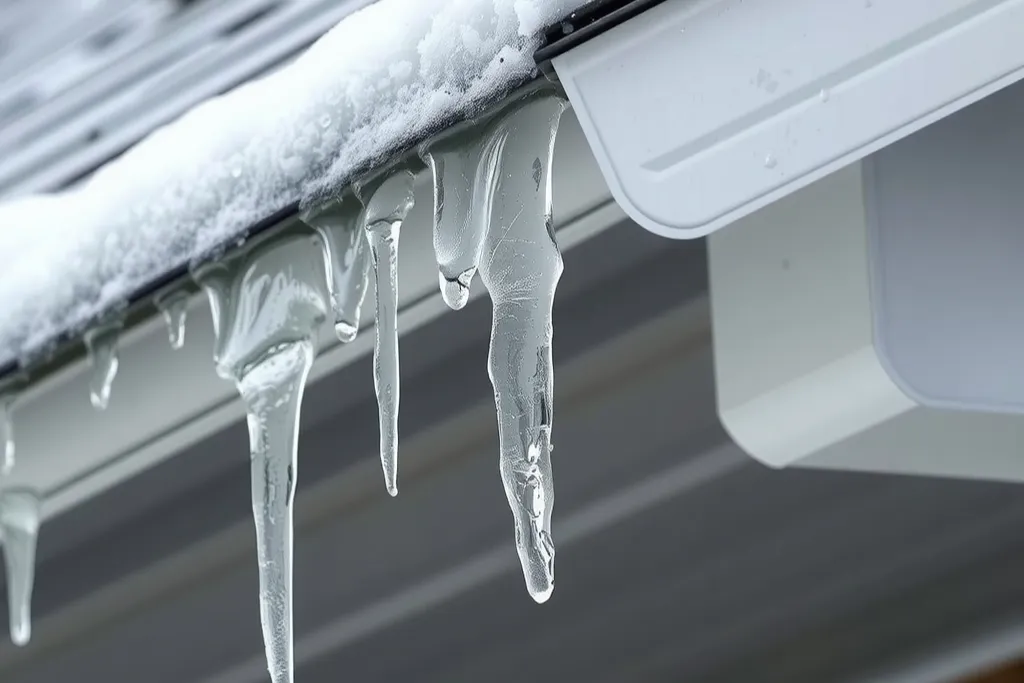
Is it safe to clear ice from the roof?
Clearing ice from a steep roof is one of the more dangerous jobs a homeowner can attempt. The state Office of the Commissioner of Insurance advises a cold, ventilated attic and roof raking from the ground, and it advises against climbing onto the roof to chip ice.
Roof raking with a long-handled rake from the ground removes loose snow before it melts into a dam, and it works best in the first hours after a heavy fall. It does not reach the ice already formed at the eave, and it should never be used with a metal tool that can pierce the shingles or the gutters.
Ice on a sloped surface gives no warning before it slides, and a fall from a ladder under a dam is a serious risk. A crew that is trained for the work sets its own footing and fall protection, and Waukesha Roofing recommends that a homeowner who sees a dam leaking into the house does not try to clear it alone.
Why does the attic matter more than the ice?
The ice is the result of the attic heat, and clearing it without changing the heat leaves the cause in place. An attic that is cold, ventilated and sealed at the ceiling plane gives the dam nothing to form from, so the attic repair is the part that keeps the problem from coming back.
The ventilation path needs to run from soffit to ridge so that cold air moves across the underside of the roof deck. Blocked soffits, insulation pushed against the eaves and vent chutes that were never installed all keep the deck warm at the edge, where the dam forms first.
Air sealing matters as much as venting. Plumbing stacks, recessed lights, the top plate of interior walls and the attic hatch are the usual routes for heat. A sealed attic floor with insulation at the depth the house needs keeps the roof deck close to outdoor temperature, and that stops the melt before it starts.
What happens to the water that got in?
Water that has crossed the shingles and entered the house has to be dried and checked, not just left to evaporate. Wet insulation loses its insulating value, and wet framing and drywall become a mold problem if they stay damp for more than a few days.
The technician measures moisture in the wall and the ceiling below the stain. A reading, rather than a surface color, decides whether a section of drywall must come out. Insulation that has compressed or soaked is replaced, because a batt that is wet in the middle does not recover its loft when it dries.
The insurance question is separate from the repair. Wisconsin's Office of the Commissioner of Insurance has published ice-dam advice for homeowners, and a claim or complaint process is not covered by this page, because the research did not establish the steps for it. A homeowner with a claim should keep photos of the damage before anything is removed.